Joy-Con Drift Repair or Replace
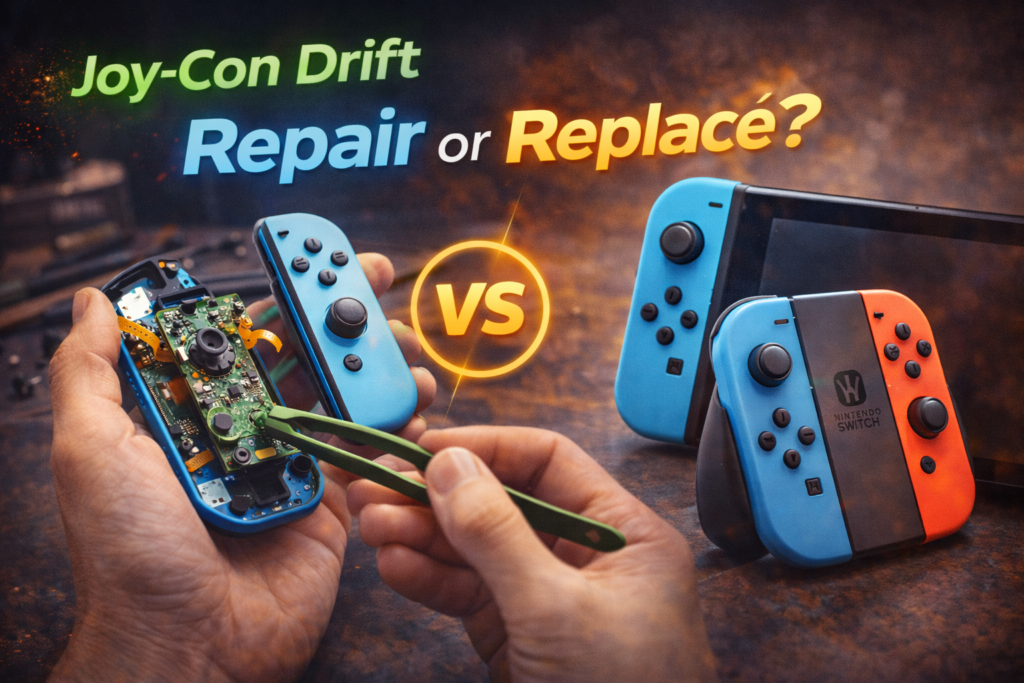
Joy-Con drift is one of the most common and frustrating problems Nintendo Switch owners face. Your character moves on its own. Menus scroll without touching anything. Games become nearly impossible to play accurately. For parents, kids, and serious gamers alike, Joy-Con drift turns a fun console into a constant source of annoyance.
In many cases, the first instinct is to buy a new Joy-Con. Others attempt DIY fixes using cleaning sprays or online tutorials. The real question most Switch owners should ask is this:
Should you repair Joy-Con drift, or is it better to replace the controller?
The correct answer depends on why the drift is happening, how severe it is, and whether the Joy-Con has underlying wear or damage. This article explains what Joy-Con drift really is, what causes it, why it almost always gets worse, which fixes actually work, and how to decide between repair and replacement without wasting money.
What Is Joy-Con Drift?
Joy-Con drift occurs when the analog stick registers movement even when you are not touching it. The Switch interprets this as real input, causing:
- Characters to walk or run on their own
- Camera angles to move randomly
- Menus to scroll without control
- Inaccurate aiming or movement
Drift can be mild at first, happening only occasionally, or severe enough to make games unplayable.
How Joy-Con Analog Sticks Work
Inside each Joy-Con analog stick are delicate internal components:
- A plastic thumbstick
- Potentiometers that measure position
- Thin conductive contact surfaces
- Springs and flex points
When you move the stick, these components translate physical movement into electrical signals. Over time, these contact points wear down, become dirty, or lose accuracy.
Because Joy-Cons are compact and lightweight, their analog sticks are more fragile than traditional controllers.
Most Common Causes of Joy-Con Drift
1. Internal Wear (Most Common Cause)
Joy-Cons use small, low-profile analog stick modules. With normal use, the internal contacts wear down.
This causes:
- Inaccurate position readings
- “Neutral” position shifting
- Constant false input
This is not user error — it is a design limitation combined with long-term use.
2. Dust and Debris Inside the Stick
Dust, skin particles, and debris can enter around the base of the thumbstick.
Over time, debris:
- Interferes with electrical contact
- Causes inconsistent readings
- Makes drift appear suddenly
This is especially common on Joy-Cons used by children or carried frequently.
3. Moisture and Humidity Exposure
Even small amounts of moisture from:
- Sweat
- Humid environments
- Minor spills
can affect the internal contacts. Moisture causes corrosion and residue buildup, leading to erratic stick behavior.
4. Pressure and Physical Stress
Joy-Cons are often:
- Stored in backpacks
- Sat on
- Dropped
- Pressed during intense gameplay
Physical stress can deform internal components, speeding up wear and drift.
5. Calibration Misalignment (Less Common)
In some cases, software calibration can temporarily mask drift. However, calibration does not fix worn hardware — it only compensates briefly.
Why Joy-Con Drift Almost Always Gets Worse
Joy-Con drift rarely stays at the same level because:
- Internal wear continues
- Debris buildup increases
- Electrical contacts degrade
- False input becomes more frequent
What starts as slight movement eventually turns into constant drifting, even when the controller is untouched.
Common Myths About Fixing Joy-Con Drift
Myth 1: “Just Recalibrate It”
Calibration can help briefly, but it does not repair worn contacts.
Myth 2: “Cleaning Spray Fixes It Permanently”
Contact cleaner may reduce symptoms temporarily, but drift usually returns once wear is present.
Myth 3: “It’s a Software Bug”
True Joy-Con drift is hardware-based, not a firmware glitch.
Myth 4: “All Drift Means the Controller Is Trash”
Many drifting Joy-Cons are repairable with proper analog stick replacement.
DIY Fixes: Why They Often Fail
Many online guides suggest:
- Spraying contact cleaner under the stick
- Using compressed air
- Opening the Joy-Con without proper tools
These methods can:
- Push debris deeper
- Damage ribbon cables
- Short internal components
- Cause temporary improvement that quickly fades
DIY fixes often delay proper repair and sometimes make the problem worse.
When Joy-Con Drift Can Be Repaired
Repair is usually the best option when:
- Drift is consistent but not extreme
- The Joy-Con otherwise works normally
- Buttons, rails, and battery are in good condition
- The controller is original and not heavily damaged
Analog Stick Replacement
The most reliable repair is replacing the analog stick module.
This:
- Restores accurate input
- Eliminates drift
- Provides long-term reliability
When done correctly, repaired Joy-Cons often perform like new.
When Replacing the Joy-Con Makes More Sense
Replacement may be the better choice if:
- The Joy-Con has multiple issues (drift + battery + rail problems)
- There is liquid damage or corrosion
- The shell or internal structure is cracked
- Repair cost approaches replacement value
In these cases, replacement avoids repeated repairs.
Cost Comparison: Repair vs Replace
While costs vary, generally:
- Analog stick repair is significantly cheaper than buying new Joy-Cons
- Replacement costs more but provides a completely new controller
For families with multiple drifting controllers, repair often saves a substantial amount.
Why Professional Repair Is Safer Than DIY
Professional Joy-Con repair includes:
- Proper disassembly without damage
- High-quality replacement stick modules
- Ribbon cable protection
- Calibration testing
- Button and rail checks
This ensures the drift is actually fixed — not temporarily hidden.
Special Considerations for Parents
For parents managing a Nintendo Switch used by kids:
- Drift often returns quickly due to heavy use
- Replacing every drifting Joy-Con becomes expensive
- Repair is often more cost-effective
Teaching gentle handling and proper storage also helps reduce repeat issues.
How Long a Repaired Joy-Con Lasts
With quality parts and proper installation:
- Repaired Joy-Cons can last years
- Performance is comparable to new controllers
- Drift recurrence is much less likely
Longevity depends on usage habits and environment.
How to Reduce Future Joy-Con Drift
After repair or replacement:
- Keep Joy-Cons clean and dry
- Avoid eating while playing
- Store controllers in a case
- Avoid pressing sticks excessively
- Don’t leave Joy-Cons loose in bags
These habits reduce debris and wear.
Repair vs Replace: Quick Decision Guide
Repair if:
- Drift is the main issue
- Controller is otherwise healthy
- You want to save money
Replace if:
- Multiple components are failing
- There is water damage
- Physical damage is present
Want to know the best thing to do? Contact us now!
Final Takeaway
Joy-Con drift is a hardware problem caused by wear, debris, and delicate internal components — not user error. While temporary fixes may reduce symptoms briefly, they do not solve the underlying issue.
In most cases, repairing the analog stick is the smartest and most cost-effective solution, restoring accuracy and extending controller life. Replacement should be reserved for Joy-Cons with multiple or severe issues.
Knowing when to repair and when to replace prevents frustration, saves money, and keeps your Nintendo Switch enjoyable for the long term.