Salt Water Phone Damage
Introduction
Dropping a phone into salt water is one of the most damaging liquid accidents a device can experience. In St. Charles, we frequently see phones exposed to ocean water, saltwater pools, or even salty slush during winter months. Many of these phones appear fine at first, which leads users to underestimate the severity of the damage.
Salt water is far more destructive than fresh water. It accelerates corrosion, creates conductive residue, and continues damaging internal components long after the phone dries. Phones exposed to salt water have one of the highest rates of delayed failure if not treated properly.
This article explains why salt water is so dangerous to phones, what happens internally after exposure, why damage progresses rapidly, and when professional water damage repair is the only reliable solution.
Why Salt Water Is Especially Harmful to Phones
Salt water contains dissolved sodium and chloride ions. These ions:
- Increase electrical conductivity
- Accelerate corrosion reactions
- Remain behind as residue after drying
Unlike clean water, salt water does not evaporate cleanly. It leaves behind a corrosive layer that continues damaging metal components.
What Happens the Moment a Phone Touches Salt Water
Immediate Electrical Impact
As soon as salt water enters the phone:
- Electrical pathways become conductive
- Short circuits may occur
- Power regulation becomes unstable
This can happen even if the phone is submerged for only a few seconds.
Rapid Corrosion Begins
Salt dramatically speeds up corrosion on:
- Charging port contacts
- Battery terminals
- Screen connectors
- Logic board solder joints
This process starts almost immediately and worsens with time.
Why Salt Water Damage Gets Worse After Drying
Many people assume damage stops once the phone dries. With salt water, the opposite is true.
After drying:
- Salt crystals remain on circuits
- Residue absorbs moisture from the air
- Corrosion continues even without visible water
This is why salt water damage often causes delayed and sudden failure.
Common Symptoms of Salt Water Damage
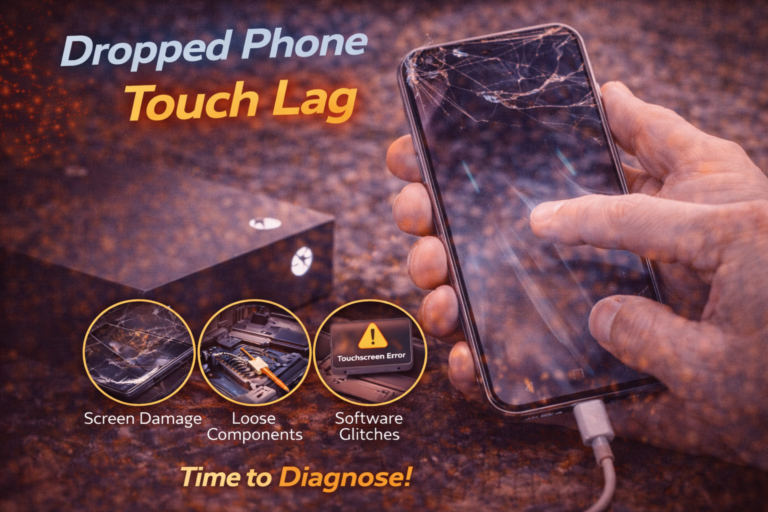
Phones exposed to salt water often develop:
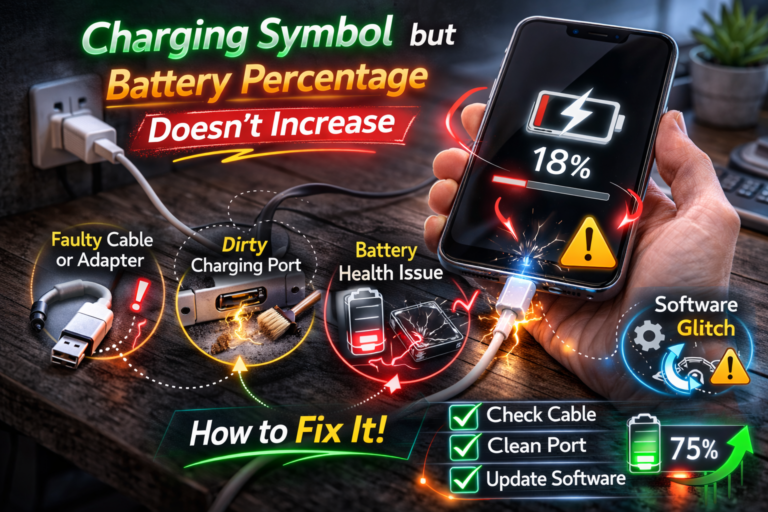
- Charging problems
- Rapid battery drain
- Overheating
- Screen flickering or blackouts
- Touch failure
- Audio distortion
- Sudden phone shutdowns
These issues may appear days or weeks after exposure.
Why Rinsing With Fresh Water Is Not Enough
Some people attempt to rinse a salt water exposed phone with fresh water. While this may dilute surface salt, it does not:
- Remove residue under chips
- Stop corrosion already in progress
- Clean sealed connectors
Rinsing without professional cleaning often spreads contamination deeper.
Why Salt Water Is Worse Than Pool Water
While pool water contains chemicals, salt water is more damaging because:
- Salt remains highly conductive
- Corrosion progresses faster
- Residue is harder to remove
Salt water damage often requires more extensive repair than pool exposure.
The Danger of Charging After Salt Water Exposure
Charging a phone after salt water exposure is extremely risky.
Charging:
- Forces current through salt-contaminated circuits
- Accelerates corrosion
- Can permanently damage power management components
Many salt water phones that could have been saved are destroyed by charging too soon.
What You Should Do Immediately After Salt Water Exposure
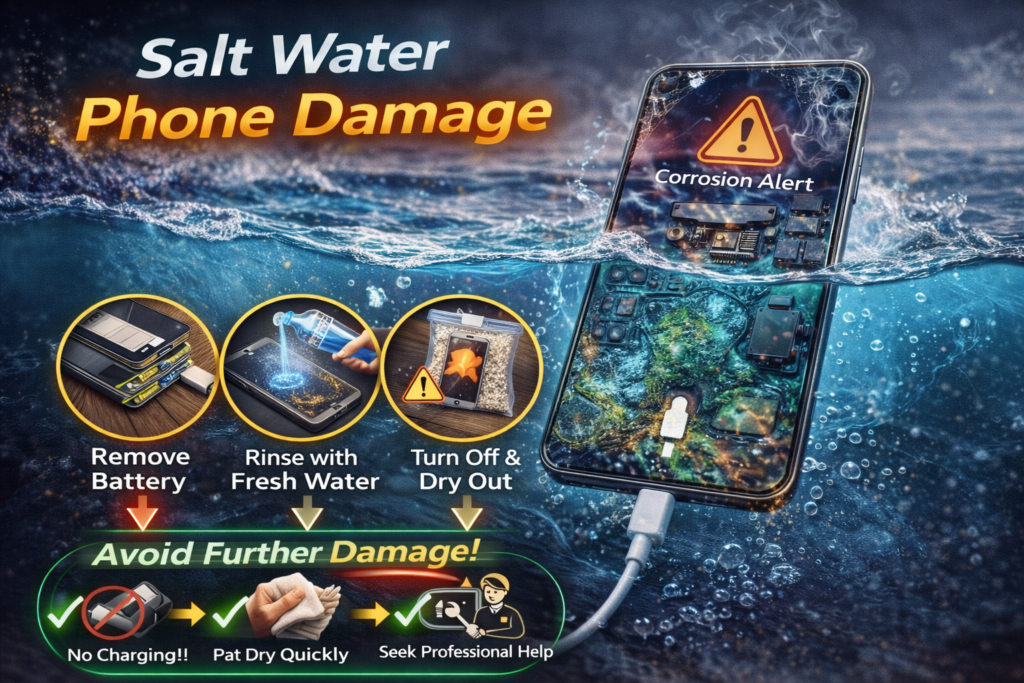
If your phone contacts salt water:
- Remove it immediately
- Power it off
- Do not charge it
- Do not press buttons repeatedly
- Avoid heat or hair dryers
Speed matters more with salt water than any other liquid.
Why Salt Water Damage Is Often Underestimated
Salt water damage is deceptive because:
- The phone may still turn on
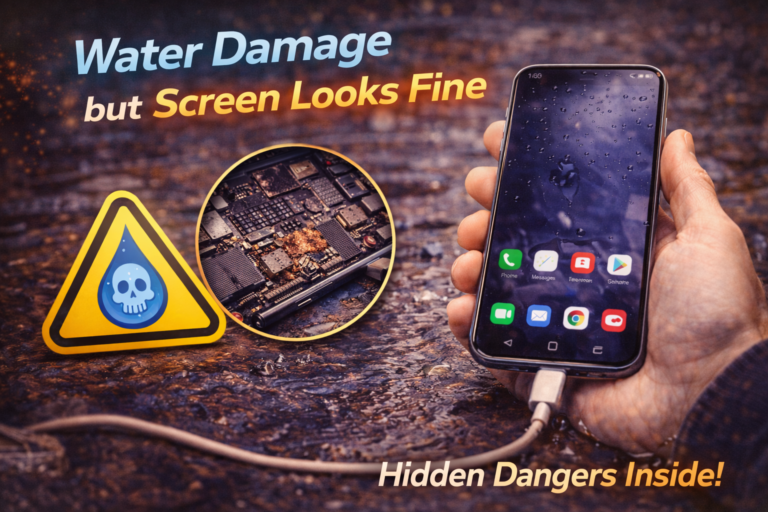
- The screen may look fine
- Initial performance may seem normal
Internally, corrosion is spreading aggressively.
How Professionals Diagnose Salt Water Damage
A professional diagnostic scan checks:
- Power stability
- Battery performance
- Charging current
- Connector integrity
- Corrosion presence
This determines how far damage has progressed.
👉 Related service: Phone Diagnostic
What Professional Water Damage Repair Does for Salt Exposure
Salt water repair focuses on complete contaminant removal, not just drying.
The process includes:
- Full device disassembly
- Internal inspection under magnification
- Chemical neutralization of salt residue
- Ultrasonic cleaning
- Controlled drying
- Component testing and replacement if needed
This is the only way to stop corrosion.
👉 Related service: Water Damage Repair
Can a Phone Be Saved After Salt Water Damage?
Yes, but time is critical.
Phones have the best chance if:
- They are powered off immediately
- Charging is avoided
- Professional cleaning begins quickly
Delays drastically reduce recovery success.
Why Delayed Failure Is Common With Salt Water
Delayed failure occurs because:
- Salt residue continues reacting with moisture
- Corrosion spreads under chips
- Heat cycles worsen weakened components
This leads to sudden phone death without warning.
When Screen Replacement Is Required
Salt water may require screen replacement if:
- Display flickering appears
- Touch becomes unreliable
- Corrosion reaches screen connectors
Replacing screens without cleaning often leads to repeat failure.
Long-Term Risks of Ignoring Salt Water Damage
Ignoring salt water exposure can result in:
- Complete device failure
- Data loss
- Battery swelling
- Fire or safety risks
Salt water damage rarely stabilizes on its own.
Salt Water Phone Repair in St. Charles, MO
At Phone Factory, salt water damaged phones are treated as high priority cases. Professional water damage repair focuses on removing corrosive residue and preserving internal components whenever possible.
Early intervention significantly improves outcomes.
Related Services
Final Takeaway
Salt water is one of the most destructive substances a phone can encounter. Even brief exposure allows corrosive residue to enter the device and continue damaging components long after the phone dries.
Immediate power-off and professional water damage repair are the only reliable ways to stop corrosion and protect your device. Waiting or relying on drying alone almost always leads to delayed failure.